
Cockroach Janta Party
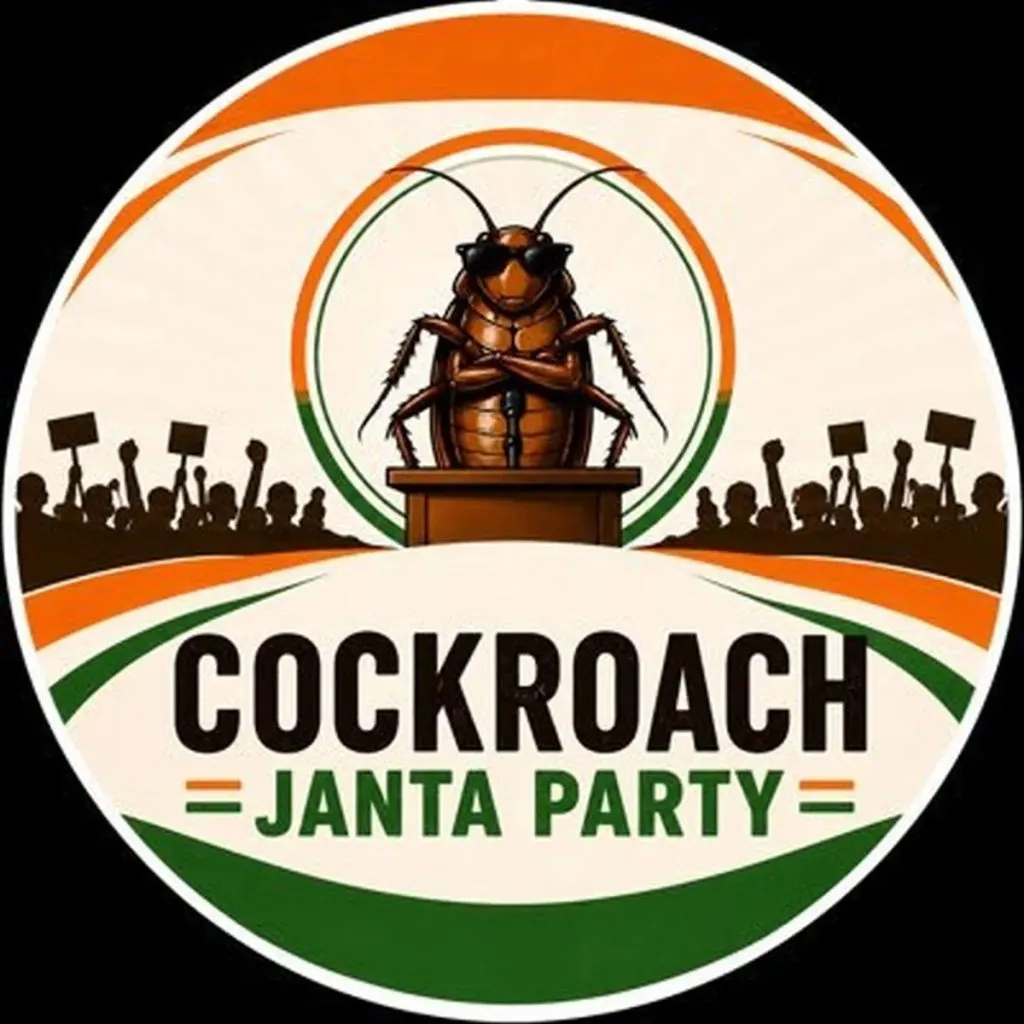
Cockroach Janta Party (CJP) is a satirical Indian political movement founded by Abhijeet Dipke on 16 May 2026. It emerged after Chief Justice of India Surya Kant remarked during a Supreme Court hearing on 15 May 2026 that there are youngsters like cockroaches, who don’t get any employment or have any place in the profession, with some of them becoming media, social media, or other activists who attack everyone. Kant later clarified that his remarks were directed at fraudulent professional credentials, not at India’s youth broadly.
Cockroach Janta Party (CJP) India’s Satirical Youth Movement
Overview
The Cockroach Janta Party (CJP), also written as Cockroach Janata Party, is a satirical Indian political movement that emerged in May 2026 and, within weeks, grew into one of the country’s most talked-about youth-led protest movements. Positioned as a self-described “voice of the lazy & unemployed,” the movement was founded by Abhijeet Dipke, a 30-year-old public relations graduate of Boston University who previously worked in political communications with the Aam Aadmi Party.
While it began as an online joke, CJP quickly evolved into a real-world organizing force, drawing tens of thousands of supporters into street protests and playing a visible role in one of India’s most closely watched political controversies of the year — the NEET-UG examination paper leak.
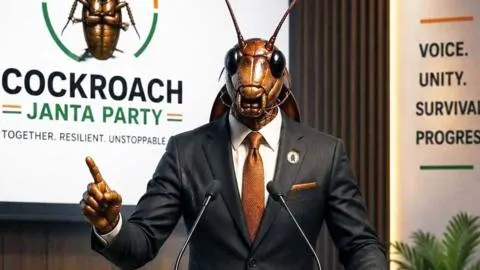
what is cockroach janata party ( CJP Party )
The Cockroach Janta Party (CJP) — also spelled Cockroach Janata Party — is a satirical Indian political movement founded on 16 May 2026 by Abhijeet Dipke, a Boston University-educated public relations graduate who previously worked in political communications with the Aam Aadmi Party.
It started as a joke: on 15 May 2026, Chief Justice of India Surya Kant remarked during a Supreme Court hearing that there are “youngsters like cockroaches” who can’t find employment and turn to activism instead. He later clarified he meant something narrower (people using fraudulent professional credentials), but the comment went viral anyway among young Indians already frustrated over unemployment. The next day, Dipke posted “What if all the cockroaches come together?” on X and launched CJP as a satirical platform for “all the cockroaches out there” — its name a parody of the ruling Bharatiya Janata Party (BJP).
What began as an online gag exploded almost overnight: over 100,000 sign-ups and 20+ million Instagram followers within days. It then merged with real, ongoing protests over the NEET-UG exam paper leak scandal, organizing demonstrations at Jantar Mantar in Delhi. Education Minister Dharmendra Pradhan resigned amid the pressure, which Dipke publicly credited partly to the “cockroach” controversy that started it all.
CJP is not registered as an official political party with the Election Commission of India — it operates more as a social-media-driven protest/advocacy movement than a traditional party, with a published manifesto covering things like judicial reform, electoral integrity, and women’s representation in Parliament.
Origins: The “Cockroach” Remark
The movement traces its origin to a Supreme Court hearing on 15 May 2026, concerning a contempt petition related to senior advocate designations and the use of fraudulent professional credentials. During the proceedings, Chief Justice of India Surya Kant remarked that there are youngsters “like cockroaches” who don’t get any employment or have any place in the profession, adding that some of them turn to media, social media, or activism and “start attacking everyone.” The Chief Justice later clarified that his comment was aimed at people acquiring fraudulent professional credentials, not at India’s youth as a whole, whom he separately described as “the pillars of a developed India.” The clarification did little to slow the backlash, and the remark quickly went viral among young Indians already frustrated by unemployment and economic pressure.
The following day, Abhijeet Dipke, then based in Boston, responded on X with a simple provocation: “What if all the cockroaches come together?” Within 24 hours, he had launched the Cockroach Janta Party as a satirical platform “for all the cockroaches out there,” listing its tongue-in-cheek eligibility criteria as being unemployed, lazy, chronically online, and able to rant professionally. The party’s name is itself a parody of India’s ruling Bharatiya Janata Party (BJP).
Rapid Growth
What started as a satirical post turned into a genuine viral phenomenon almost overnight. Within days of launch, CJP Party had:
- Over 100,000 (one lakh) registrations on its website
- More than 20 million followers on Instagram, a number some reports put as high as 22.5 million within the first five days
- Its own website, party anthem, and manifesto
- Reported early engagement from sitting political figures, including accounts of sign-ups from Trinamool Congress MPs shortly after launch
The movement’s rapid spread was aided by Dipke’s background in communications strategy, and it soon expanded from a purely online phenomenon into offline organizing, with volunteers appearing at protests and cleanup drives dressed in cockroach costumes.
From Satire to Street Protest
CJP’s online momentum coincided with — and became entangled in — growing public anger over the NEET-UG (National Eligibility cum Entrance Test) paper leak scandal, which had already fueled student protests and, tragically, was linked to a number of student suicides. CJP positioned itself as a vehicle for this broader youth frustration, organizing demonstrations at Jantar Mantar in New Delhi and a “Sansad Chalo” march toward Parliament.
By July 2026, protests connected to the movement had escalated, including clashes between activists and police during a 20 July demonstration demanding the resignation of Union Education Minister Dharmendra Pradhan. Pradhan ultimately resigned from the Union Cabinet. Addressing supporters at Jantar Mantar afterward, Dipke credited the controversy that sparked CJP’s founding for the outcome, telling the crowd: “I would like to thank CJI Surya Kant. If he hadn’t called us cockroaches, I wouldn’t have come to India. This movement would not have started.”
Following Pradhan’s resignation, CJP said it would continue pushing two further demands: compensation of one crore rupees (10 million rupees) for the families of students who died by suicide in connection with the paper leak, and accountability for police personnel involved in enforcement action against protesters on 20 July.
The Manifesto
CJP has published a manifesto outlining a broader set of structural reforms, going beyond the immediate NEET controversy. Reported demands include:
- Judicial independence – opposing the practice of appointing retired judges to political posts, commission chairmanships, or Rajya Sabha seats as post-retirement rewards
- Electoral integrity – stronger consequences for the deletion of legitimate votes and reforms to the Election Commission’s accountability
- Women’s representation – calls for 50% reservation for women in Parliament and Cabinet positions
- Media reform – demands targeting perceived media monopolies
- Constitutional and civic literacy – mandatory non-partisan political and legal education in schools, including how to read public budgets and file Right to Information (RTI) requests
It’s worth noting that multiple websites have published manifesto-like content under the CJP name, and at least one site explicitly describes itself as independent satirical commentary rather than the official movement. As with many fast-moving, decentralized online movements, the exact boundaries of “official” CJP messaging versus fan-driven or parody content are not always clear-cut.
Current Status
CJP Party is not registered as a political party with the Election Commission of India, meaning it cannot formally field candidates in elections. It functions instead as a pressure and advocacy movement — part satire, part organized civic campaign — built almost entirely through social media and grassroots participation rather than traditional party infrastructure.
Whether CJP evolves into a formally registered political party, fades as online movements often do, or continues operating as a hybrid satire-activism campaign remains an open question. Given how recent and fast-evolving this story is, further developments should be checked against current news coverage.